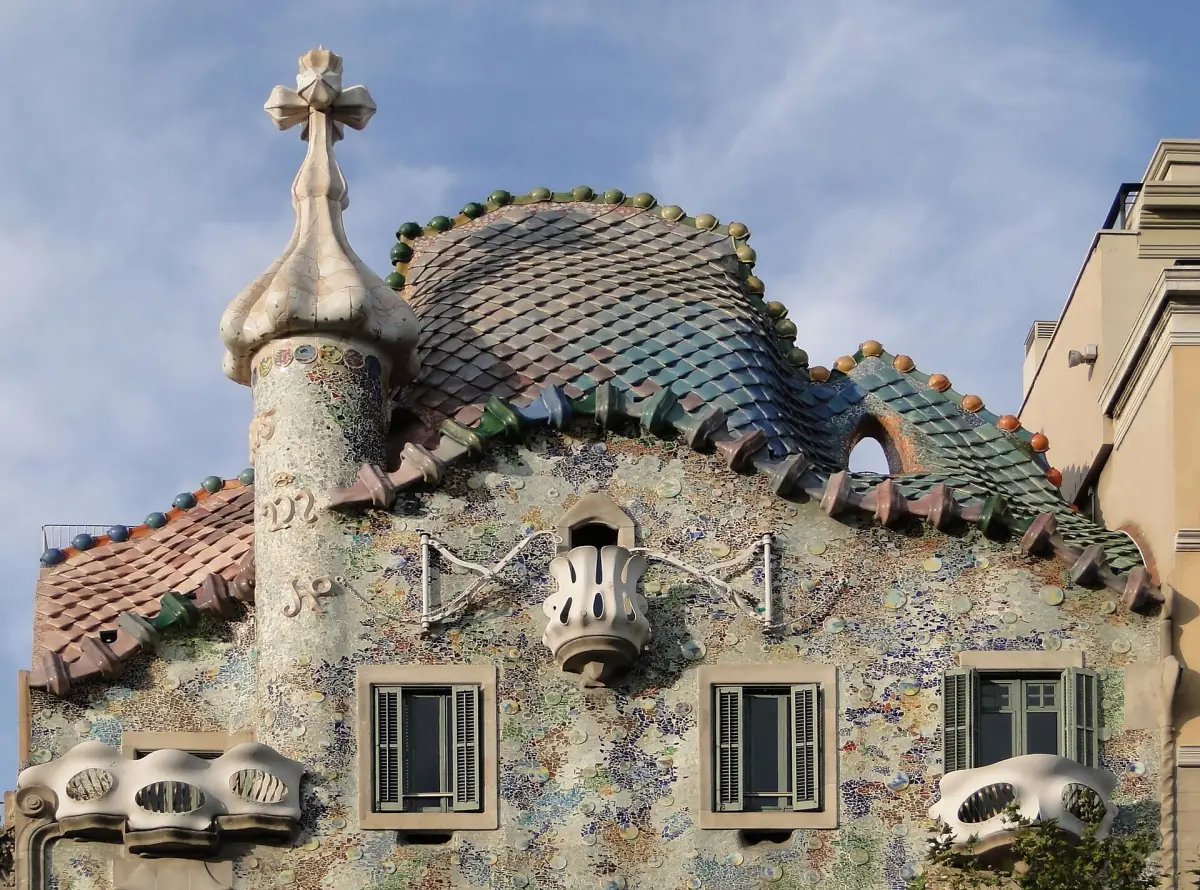
The facade and roof at a glance
Casa Batlló stands at Passeig de Gràcia 43. Gaudí rebuilt an existing 1870s house for the textile manufacturer Josep Batlló i Casanovas, who bought it in 1903. The conversion took place from 1904 to 1906, and Gaudí changed the facade, the room layout and the light well.
You can study the facade from the street without a ticket. The roof terrace is a different matter, because it belongs to certain ticket variants. If you want to go up, read the Casa Batlló tickets page first. The rooms behind the facade are on the inside page.
What the facade is made of
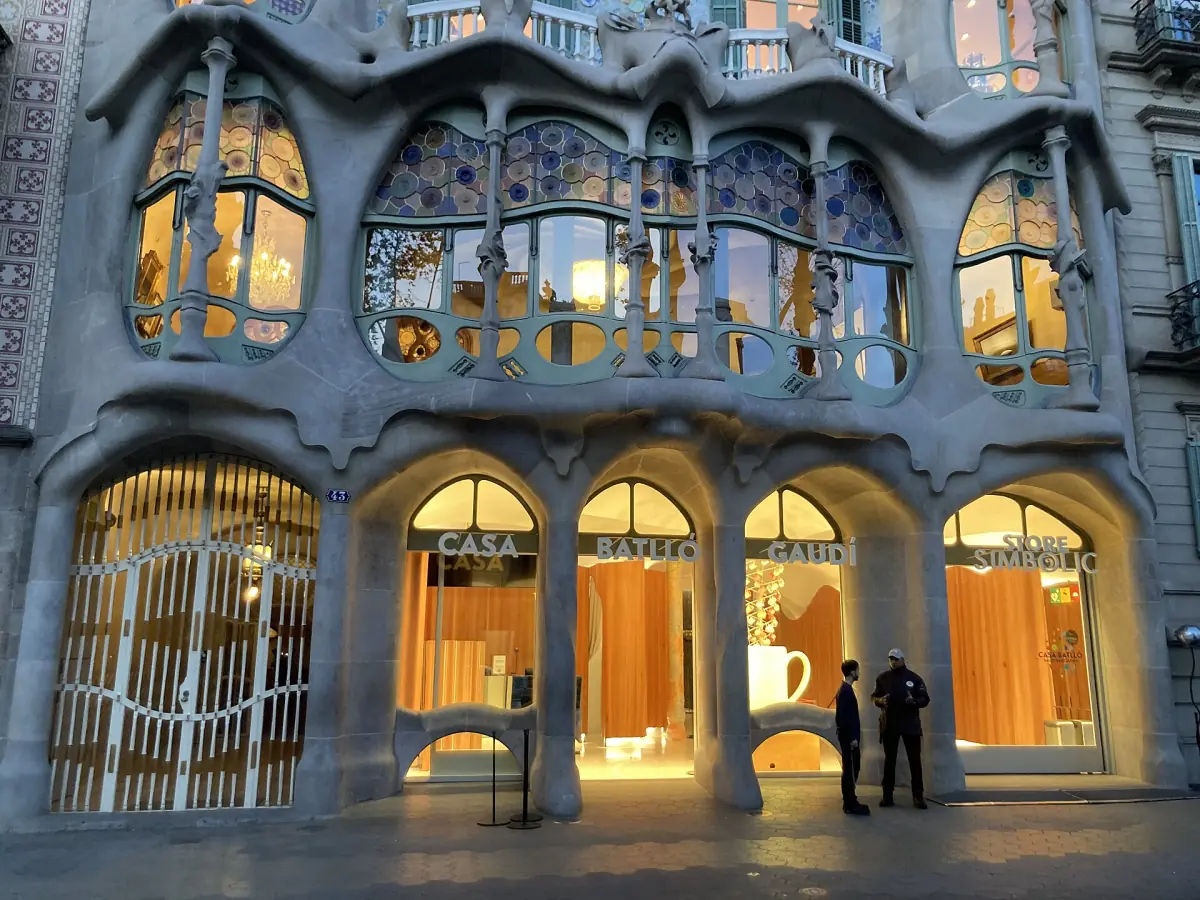
Four parts to look for, from the street up.
A wavy surface of stone, glass and ceramic
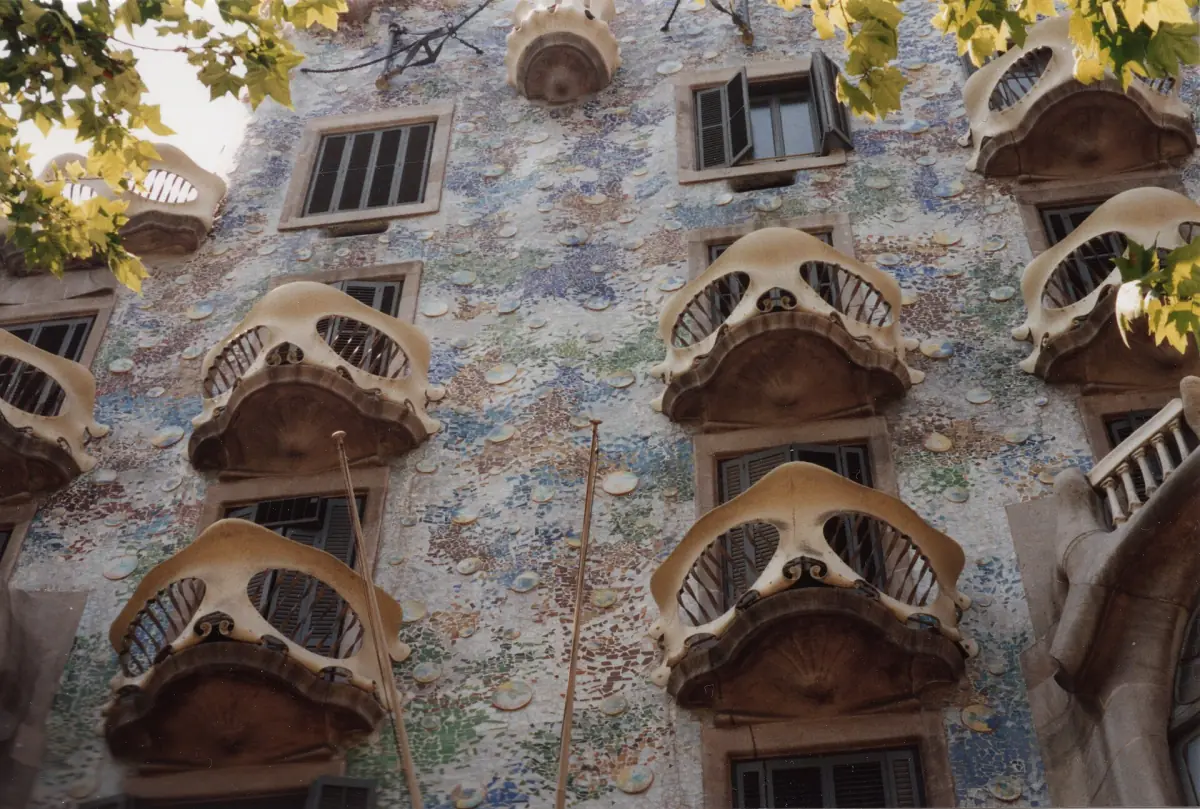
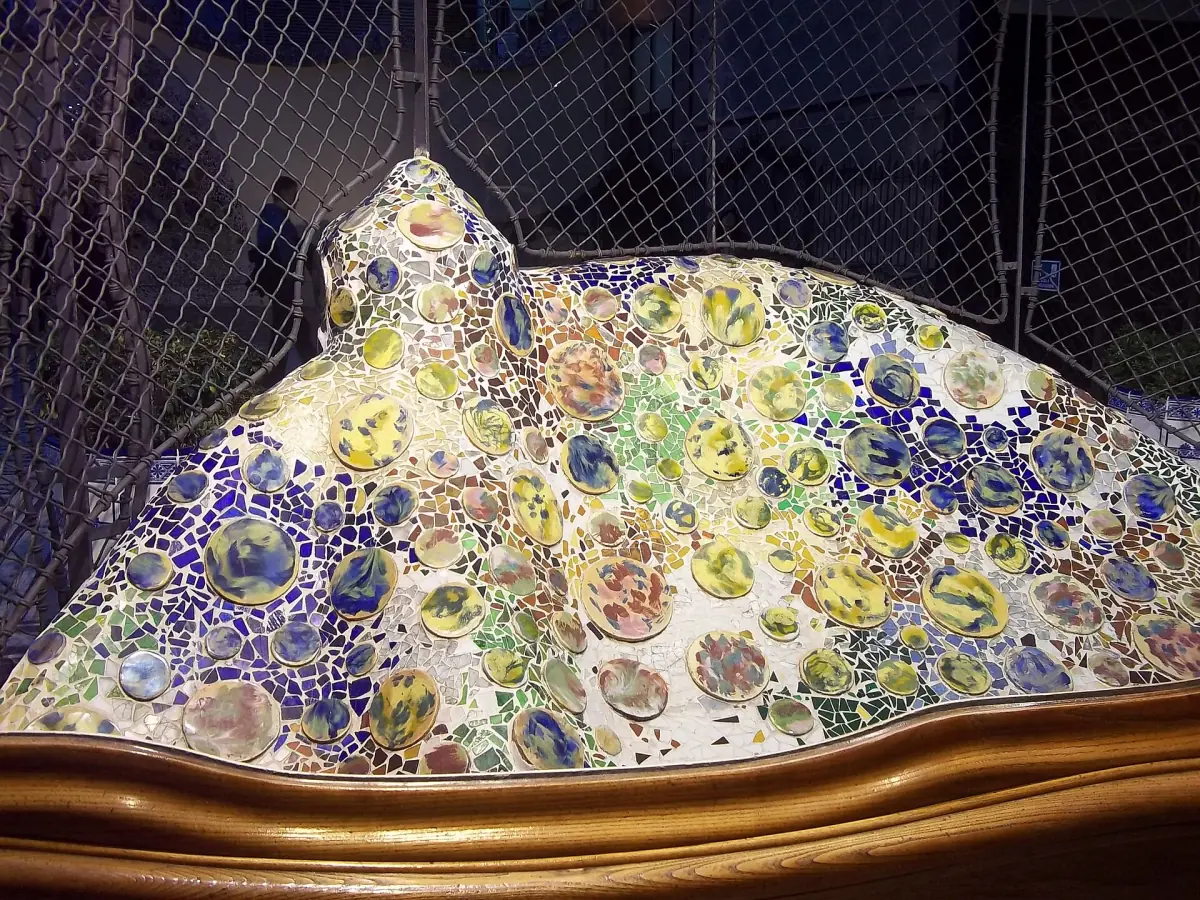
Coloured glazed ceramic and broken pieces of glass form a mosaic surface. The technique of setting broken fragments is called trencadís. It is a method, not a style of its own.
Slender columns
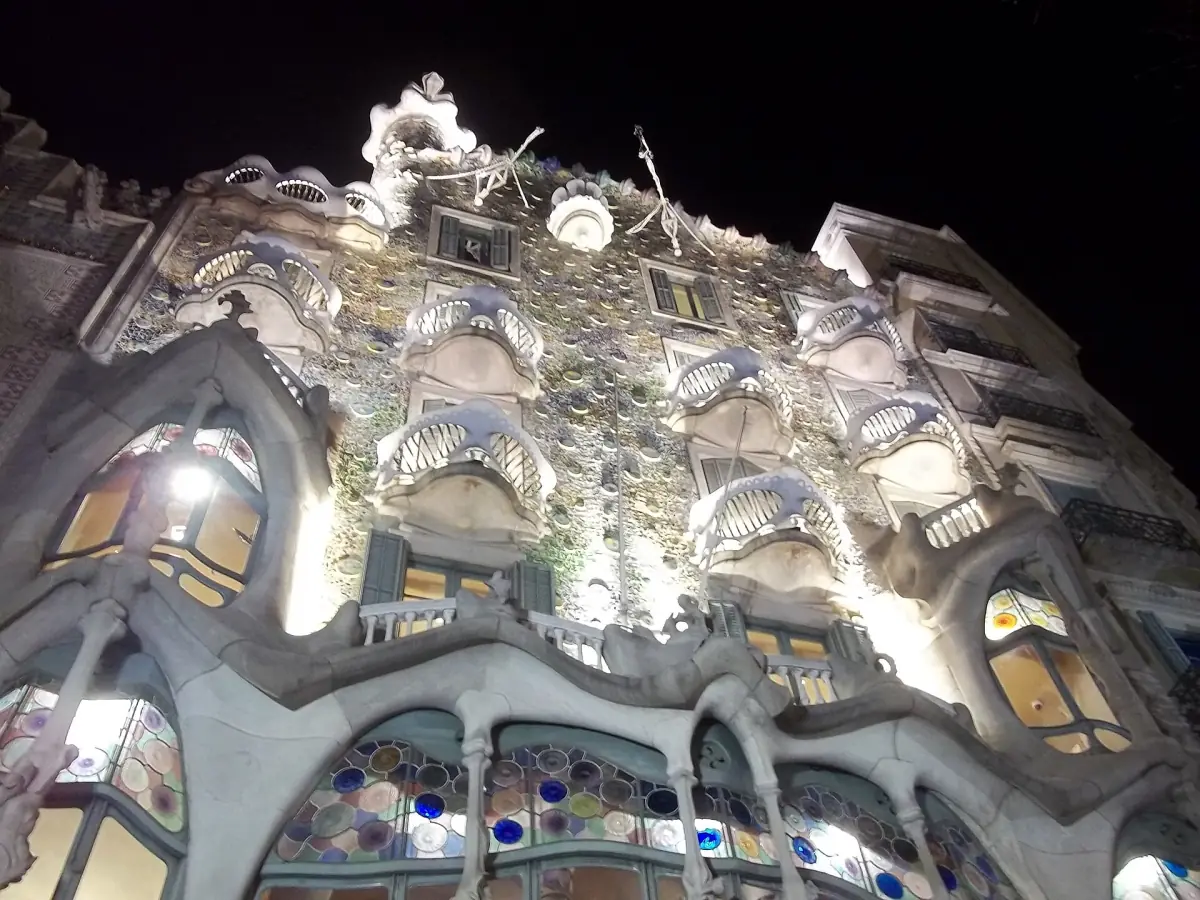
The lower facade has thin stone columns with bone-like shapes and floral ornament.
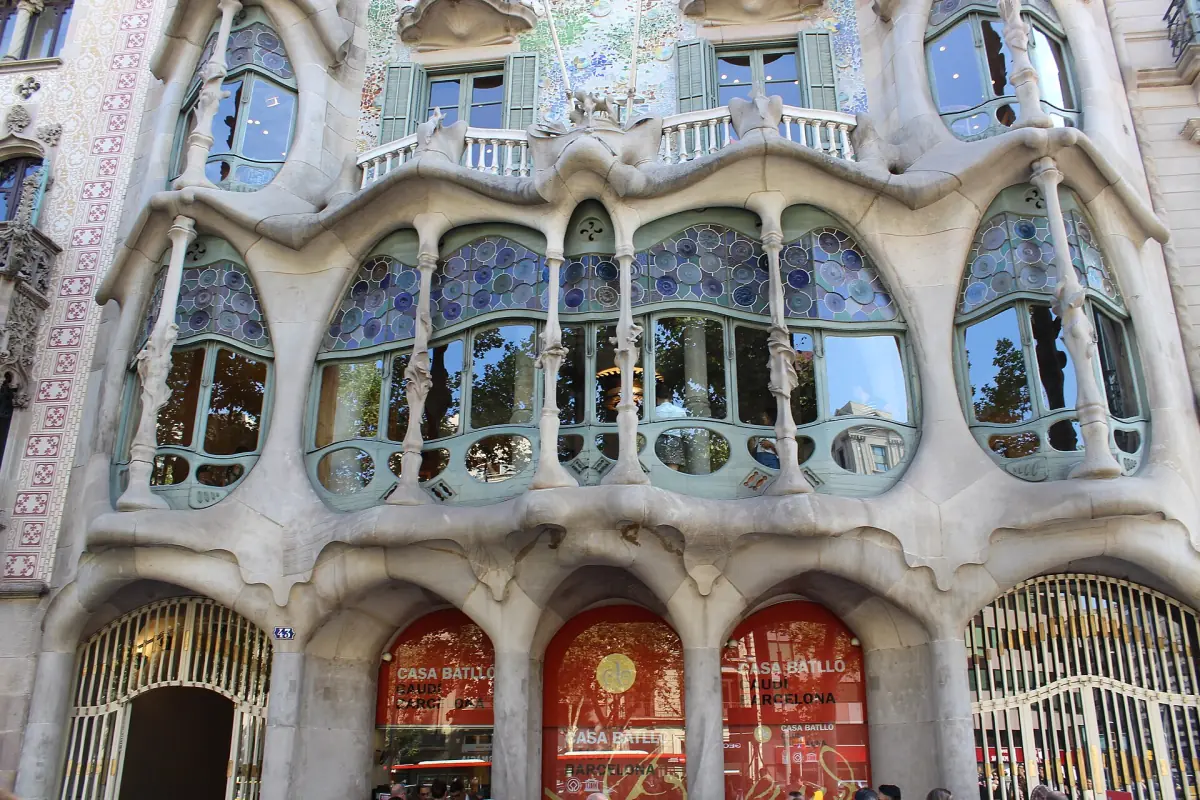
Mask-shaped balconies
The balcony railings are shaped like masks and made of iron, each in one piece. They are masks, and nothing proves they were meant as skulls.
The roof and the tower
The roof ends in large coloured scales or tiles. A tower carries a cross with four arms that point in the compass directions.
Our pick: the facades explained on a walk
This walk explains the facades of Casa Batlló and Casa Milà from the street.
Hand-picked tours, booked through GetYourGuide. Prices are indicative starting prices in euros (as of October 2026). Tap a tour for live availability and the current price in your currency.
Casa Batlló tickets with roof access
Timed entry for the facade, the rooms and the roof terrace, with live prices and availability. Check which variant lists the roof.
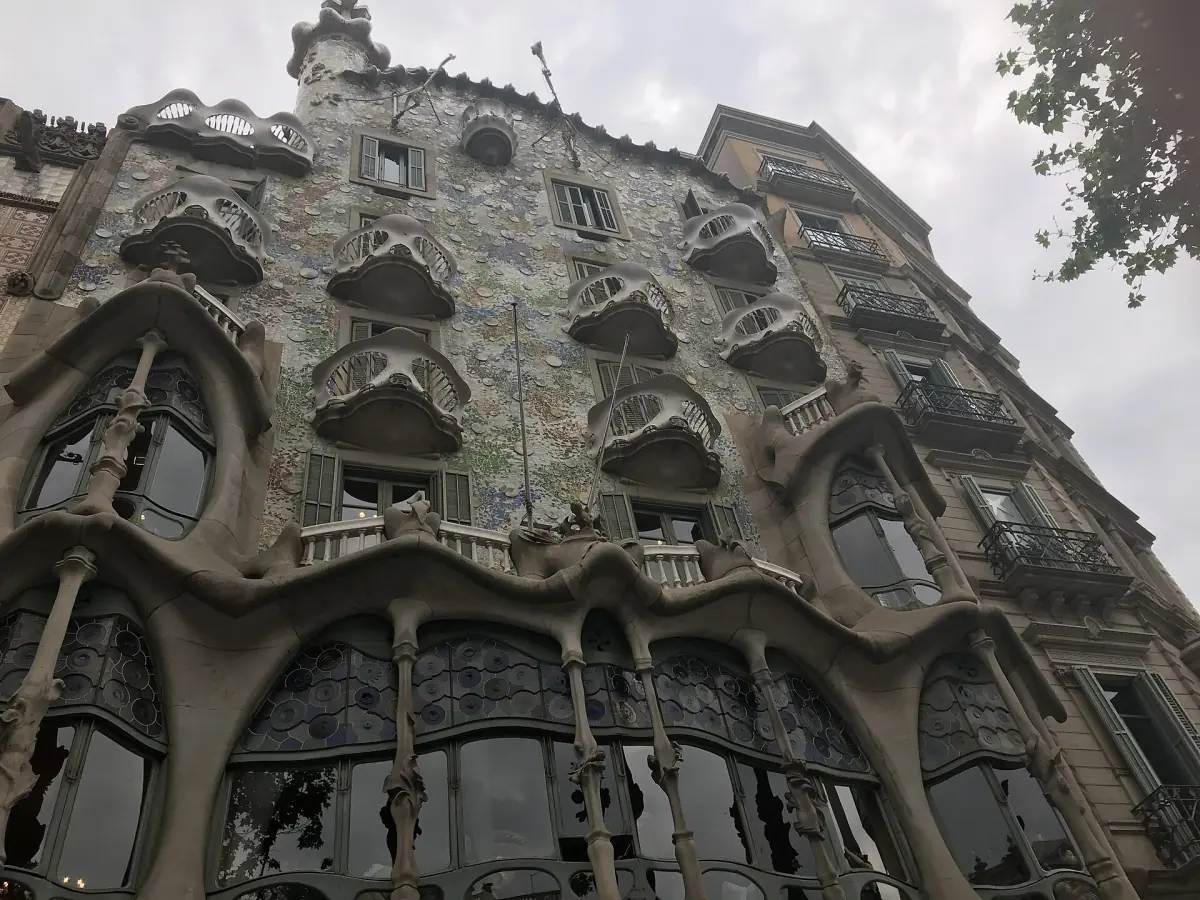
The large window and the mask balconies
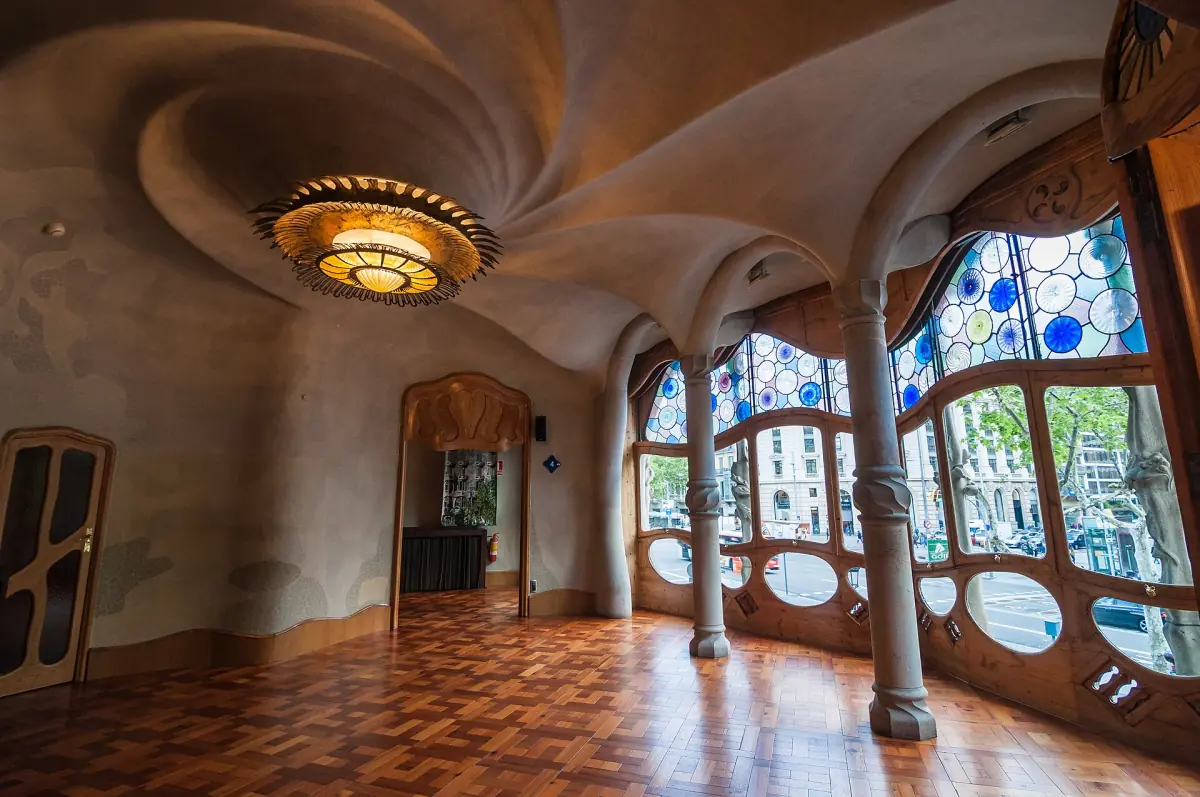
The noble floor has a large bay window onto the Passeig de Gràcia. Its glass sits in the wavy front, and the mask-shaped balconies belong to the same facade.
The neighbouring houses on the same block were built by other architects, for example the Casa Amatller at number 41 by Josep Puig i Cadafalch and the Casa Lleó Morera by Lluís Domènech i Montaner. The context is on the page about the Passeig de Gràcia and the Block of Discord.
The dragon, St George and other readings
The best-known reading is the legend of St George. In it, the arched roof is the back of the dragon, the cross is the hilt of the sword, and the bone-like columns are the dragon's victims. This is a popular interpretation. There is no documented explanation from Gaudí himself.
Another reading sees the facade as water or a seascape and compares it to Monet's water lilies. Both readings are interpretations. Neither is a settled statement of what Gaudí intended, so treat them as ways of looking.
On the roof
From above, the roof ridge looks like an arched, scaled back. The tower rises over the facade with its cross. The roof also carries four groups of chimneys, whose shape was meant to stop air flowing back down.
The view of the roof from the street and a visit to the roof terrace are not the same. The terrace needs a ticket that lists the roof: Silver, Gold and Platinum do. The evening visit does not include the roof. The roof concerts are a separate product, described on the night visit page.
Which tickets reach the roof
Card prices in 2026. They vary with date and how far ahead you book.
| Ticket | Card price | Roof |
|---|---|---|
| Blue | €35 | Audio guide and Gaudí Cube only |
| Silver | €40 | Dragon roof listed |
| Gold | €45 | Yes, plus further rooms |
| Platinum | €55 | Yes, same rooms as Gold |
| Be the First (early entry) | €45 | Yes, entry 08:30 to 08:45 |
| Regular night visit | From €25 | No, the roof is excluded |
For most visitors who want the roof, Silver is the lowest variant that lists it. Choose Be the First if you prefer to go up early.
Good to know before you look up
Restoration
Work on the facade is dated 2024, and the recovery of the rear facade and courtyard is dated 2025. Check the current view before you plan photos.
Roses on Sant Jordi
On Sant Jordi, 23 April, the facade has been marked with roses. In 2026 the roses ran from 21 to 23 April. Do not expect roses outside such dates.
Bags and valuables
Keep bags closed and valuables in inner pockets, and do not leave luggage unattended. The emergency number is 112.
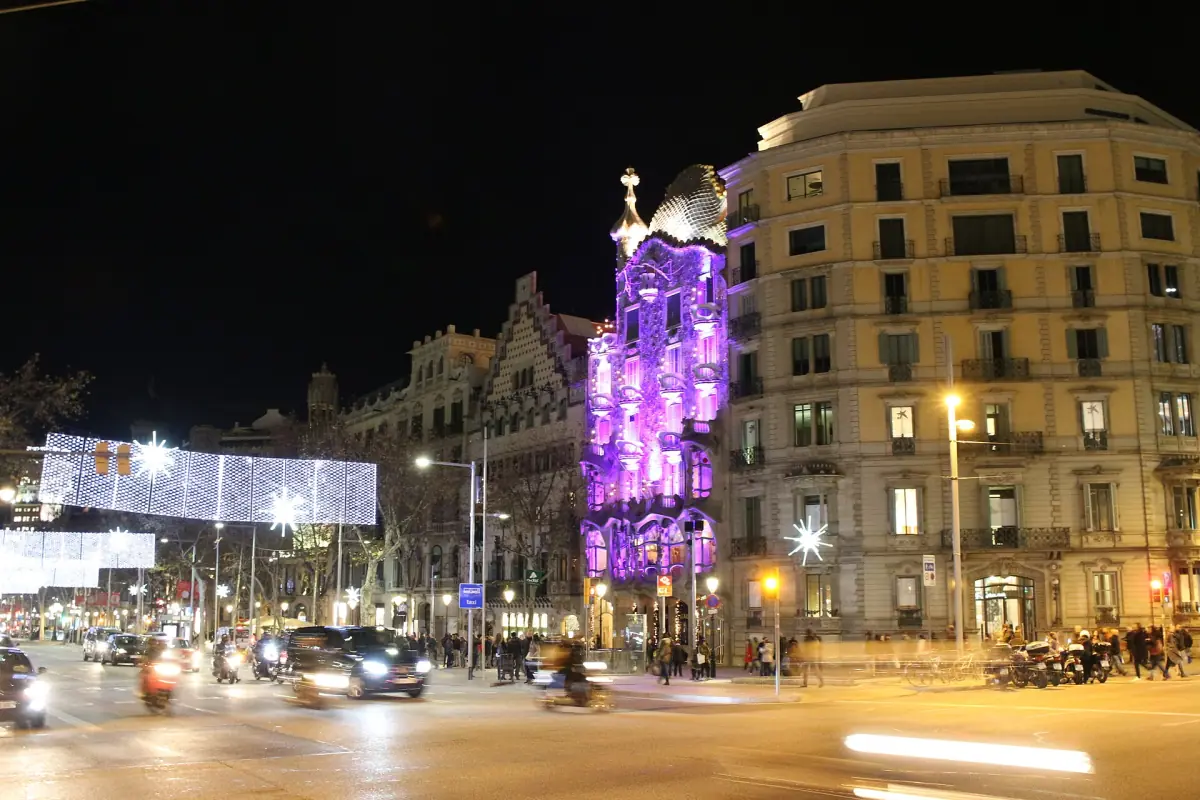
Casa Batlló facade and roof: frequently asked questions
Why is Casa Batlló called the house of the dragon?
The arched, scaled roof is often read as the back of a dragon. That reading comes from the legend of St George and is an interpretation, not an explanation recorded from Gaudí.
What are the balconies shaped like?
They are mask-shaped railings, each made of iron in one piece. They are often called skulls, but nothing proves that.
Can I see the roof without going inside?
You can see the roofline from the street. To stand on the roof terrace you need a ticket that lists the roof.
Which tickets include the roof?
Silver, Gold and Platinum list the dragon roof. Blue lists the audio guide and the Gaudí Cube only. The regular night visit excludes the roof.
What is trencadís?
A technique in which broken ceramic or glass pieces form a mosaic surface. It describes how the surface is made, not an architectural style.