Casa Batlló history at a glance
Casa Batlló began as an ordinary apartment house on the Passeig de Gràcia, built in 1877 by the architect Emili Sala Cortés. Some accounts give 1875, so you will see both years. In 1903 the textile entrepreneur Josep Batlló i Casanovas bought the building. He asked Antoni Gaudí to renovate it, and Gaudí worked on it from 1904 to 1906.
A planned demolition was dropped. Gaudí kept the building and reshaped the facade, the room layout and the light well. That is why the house is a remodel and not a new build. If you want to see what he changed, compare the current Casa Batlló tickets before you choose a date.
The timeline
From the first building to the present day.
1875 or 1877: the first house
The original building was designed by Emili Sala Cortés. It stood in the part of the Passeig de Gràcia that became a street of bourgeois town houses after the city joined up with the old village of Gràcia.
1903: the Batlló family
Josep Batlló i Casanovas, a textile entrepreneur, bought the house and chose Gaudí for the renovation.
1904–1906: Gaudí's remodel
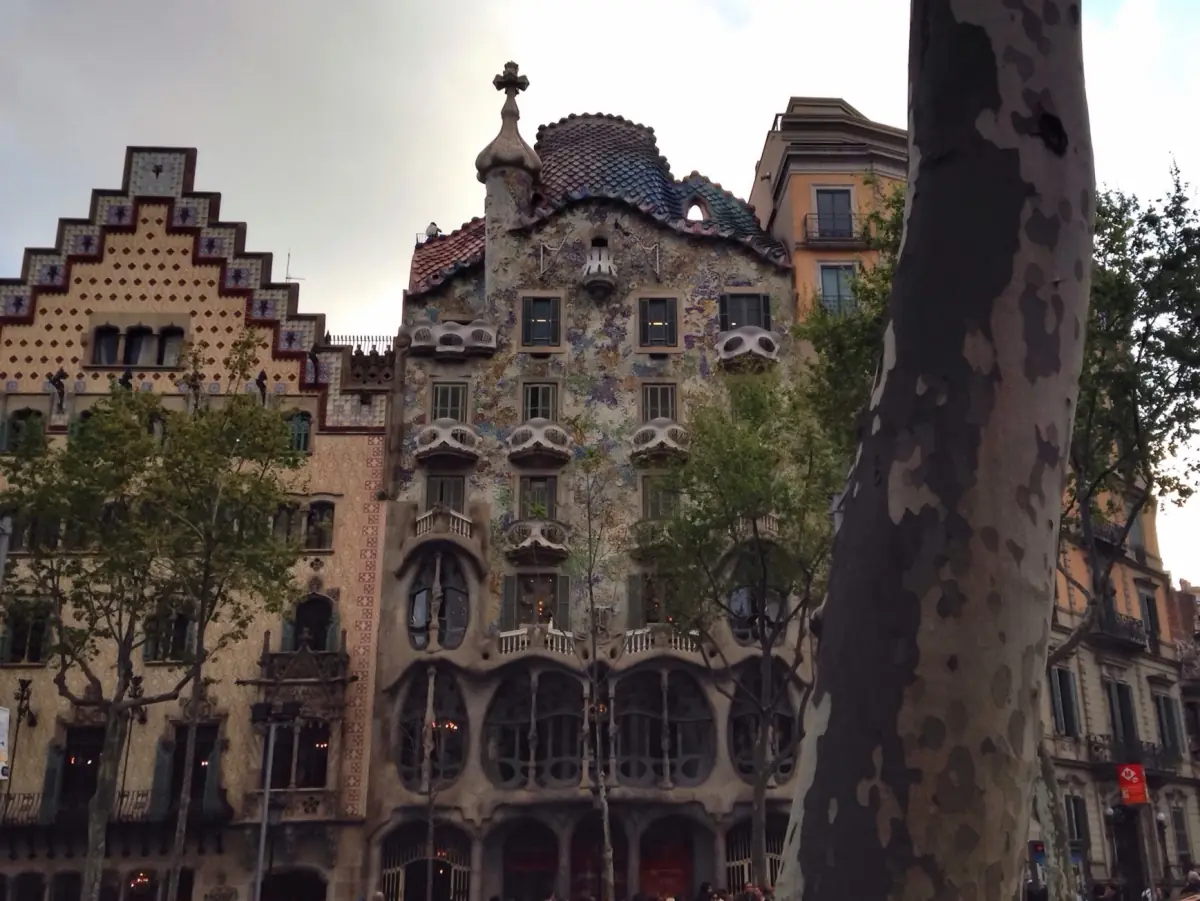
The facade, the arrangement of the rooms and the light well were redesigned. The result is the wavy front, the tiled roof and the blue light well that visitors know today.
1990s: the Bernat family
The Bernat family took over the management and restoration of the house in the 1990s. The start is usually dated to 1993. The exact date of the ownership change is not fixed, so treat 1993 as the start of their work on the house.
1995 and 2002: opening
In 1995 the house opened for public presentations and events. In 2002, the International Gaudí Year, cultural visits began. "First opened in 2002" is therefore only half the story.
2005: UNESCO
Casa Batlló was added in 2005 to the serial World Heritage site Works of Antoni Gaudí, which has 7 components in total. The house is not a World Heritage site on its own, and the original 1984 listing did not include it.
Our pick: a modernism walk
The walk puts Casa Batlló into the story of Barcelona's modernism.
Hand-picked tours, booked through GetYourGuide. Prices are indicative starting prices in euros (as of October 2026). Tap a tour for live availability and the current price in your currency.
Casa Batlló tickets and tours
Day tickets, night visits and guided options for Gaudí's house on the Passeig de Gràcia, with live prices and availability.
What Gaudí changed
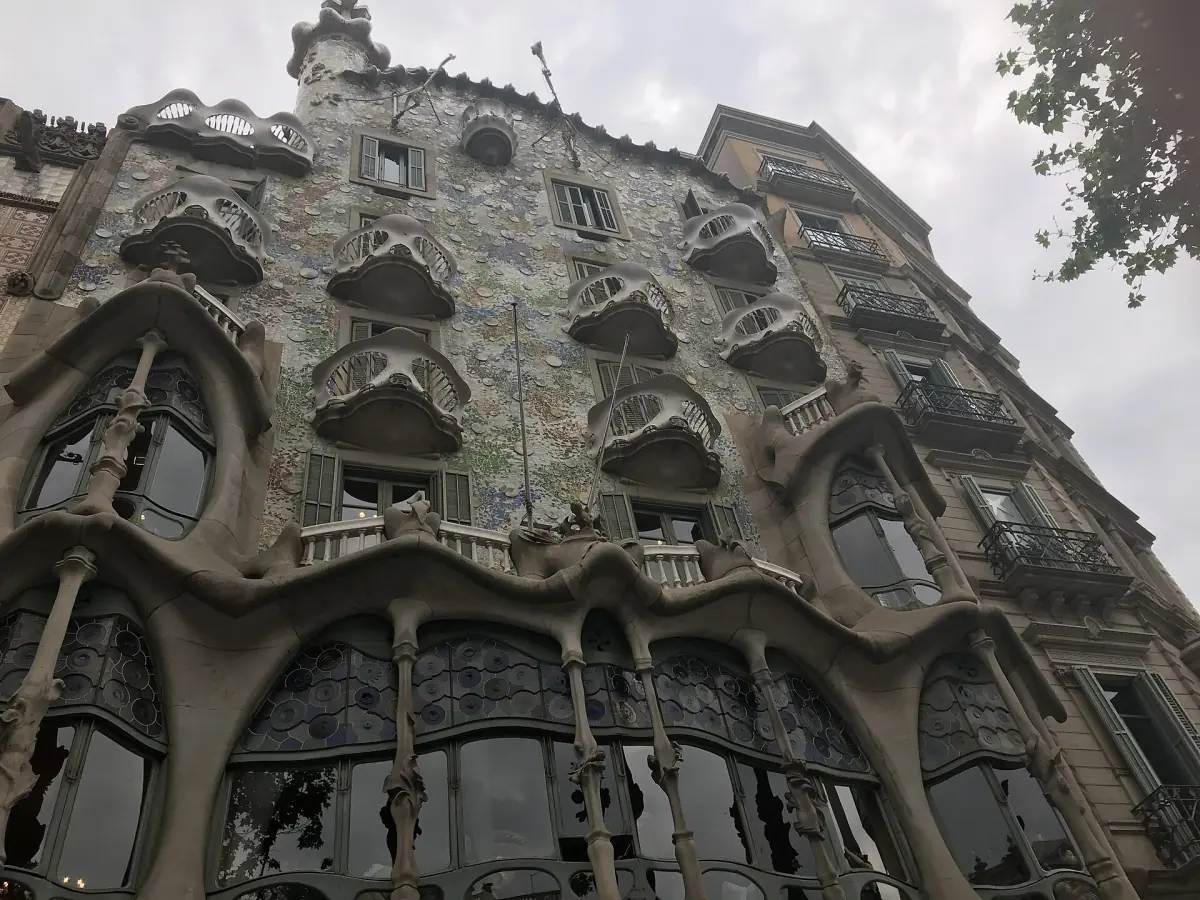
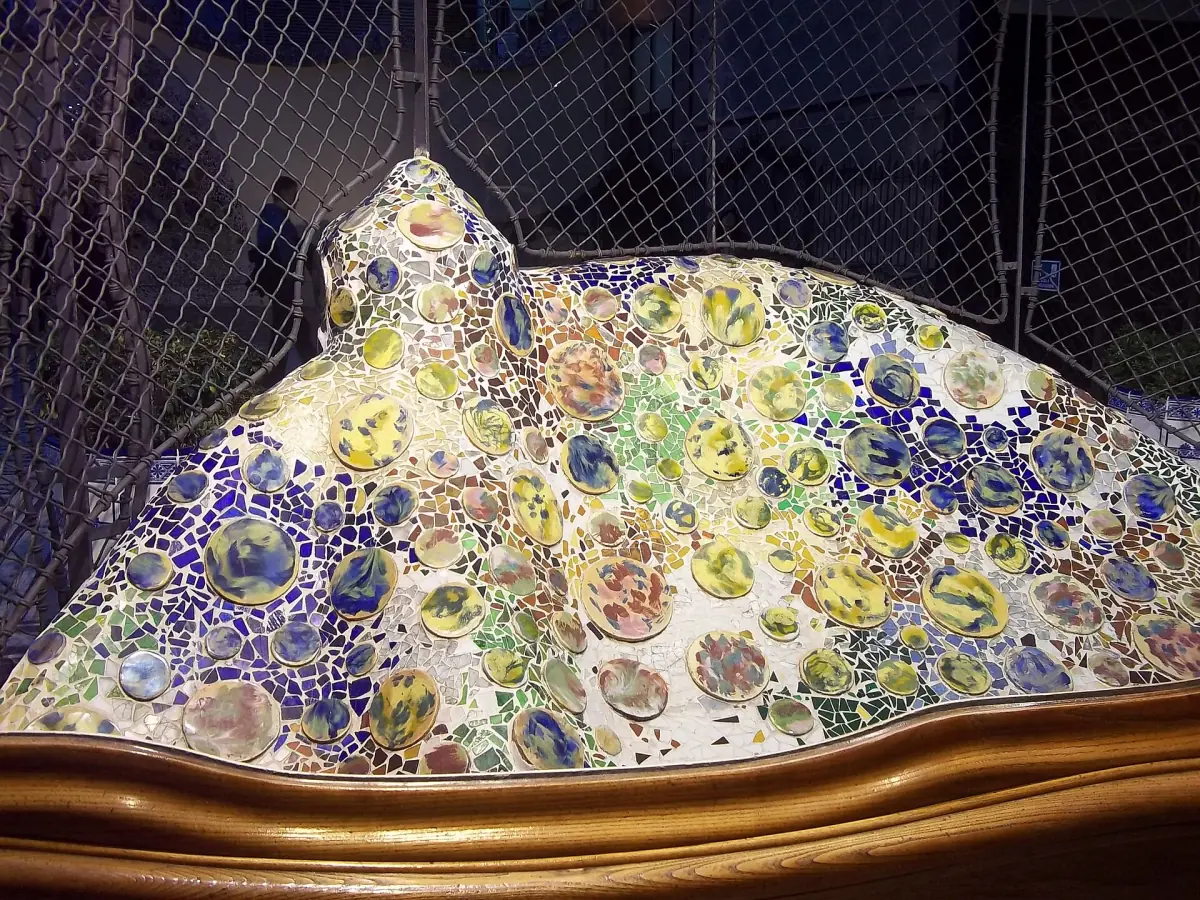
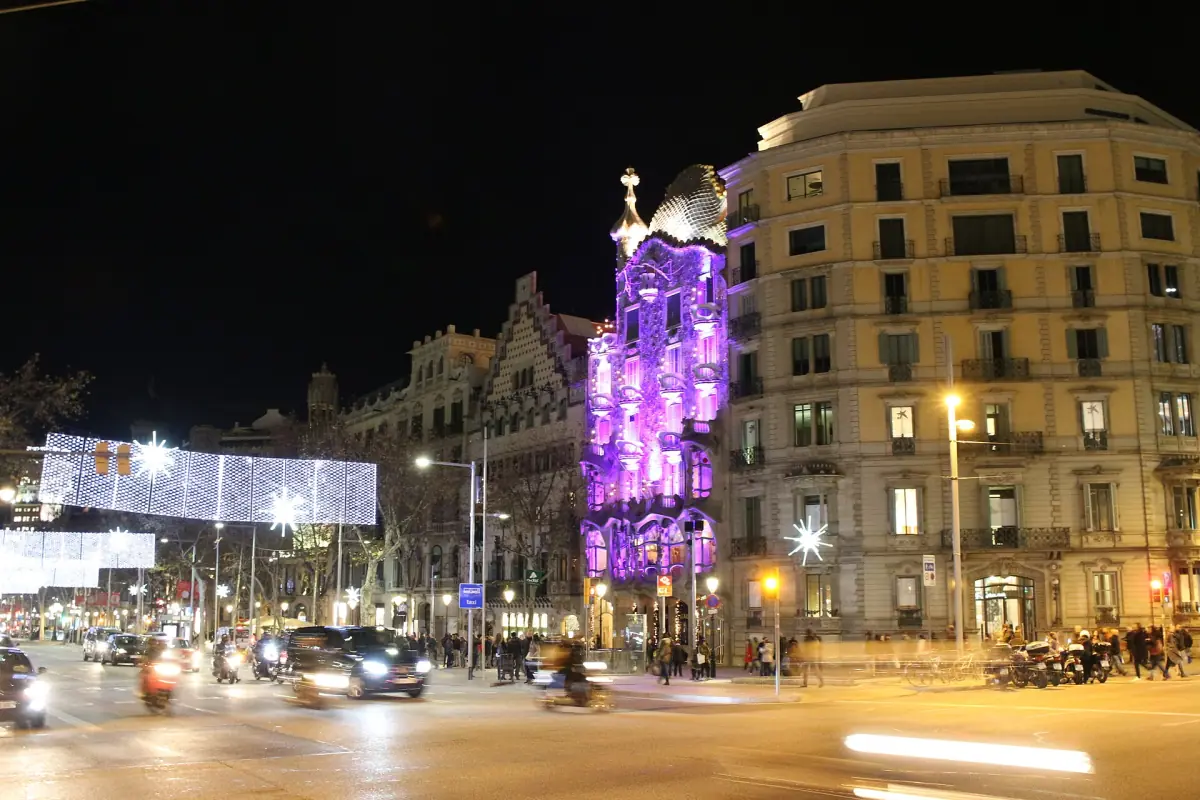
The street front became a wavy surface of stone, glass and glazed ceramic. Broken ceramic and glass pieces form a mosaic, a technique called trencadís. Slim stone columns with bone-like shapes and floral decoration sit in the lower part. The balconies are mask-shaped railings, each cast in one piece of iron. Descriptions differ on whether the iron is cast or wrought.
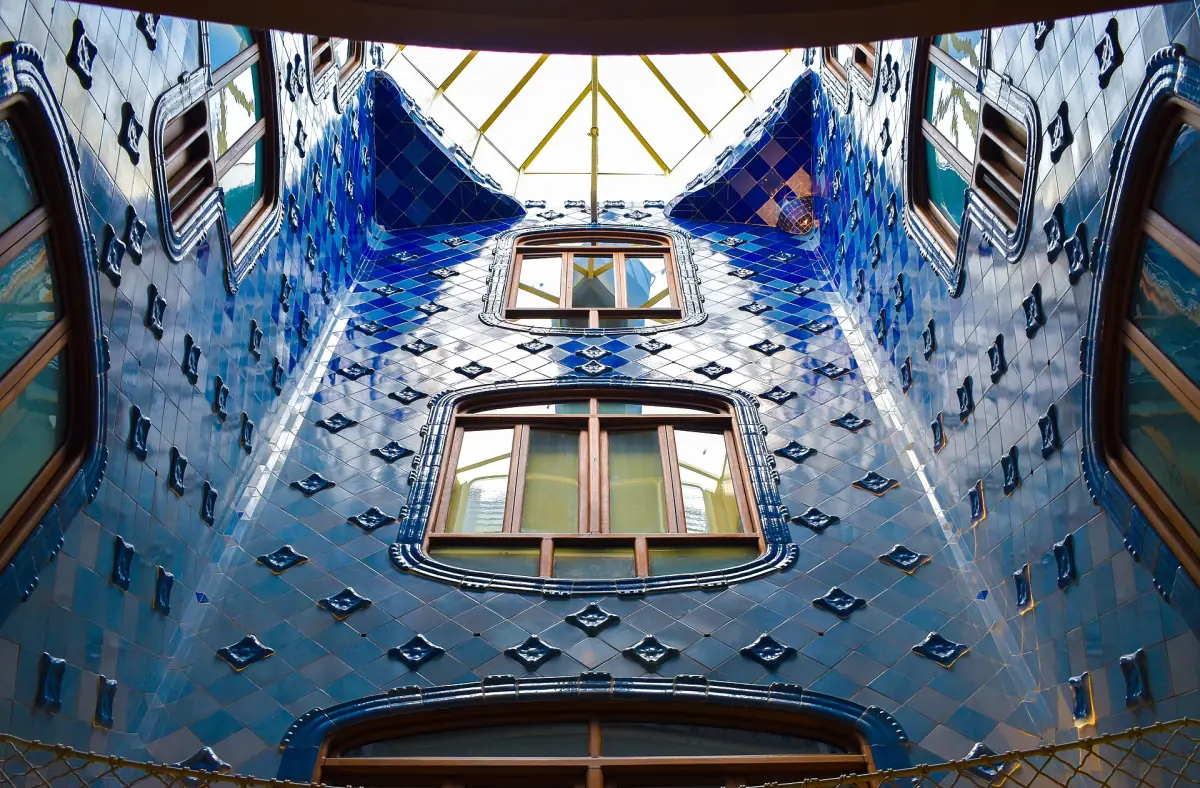
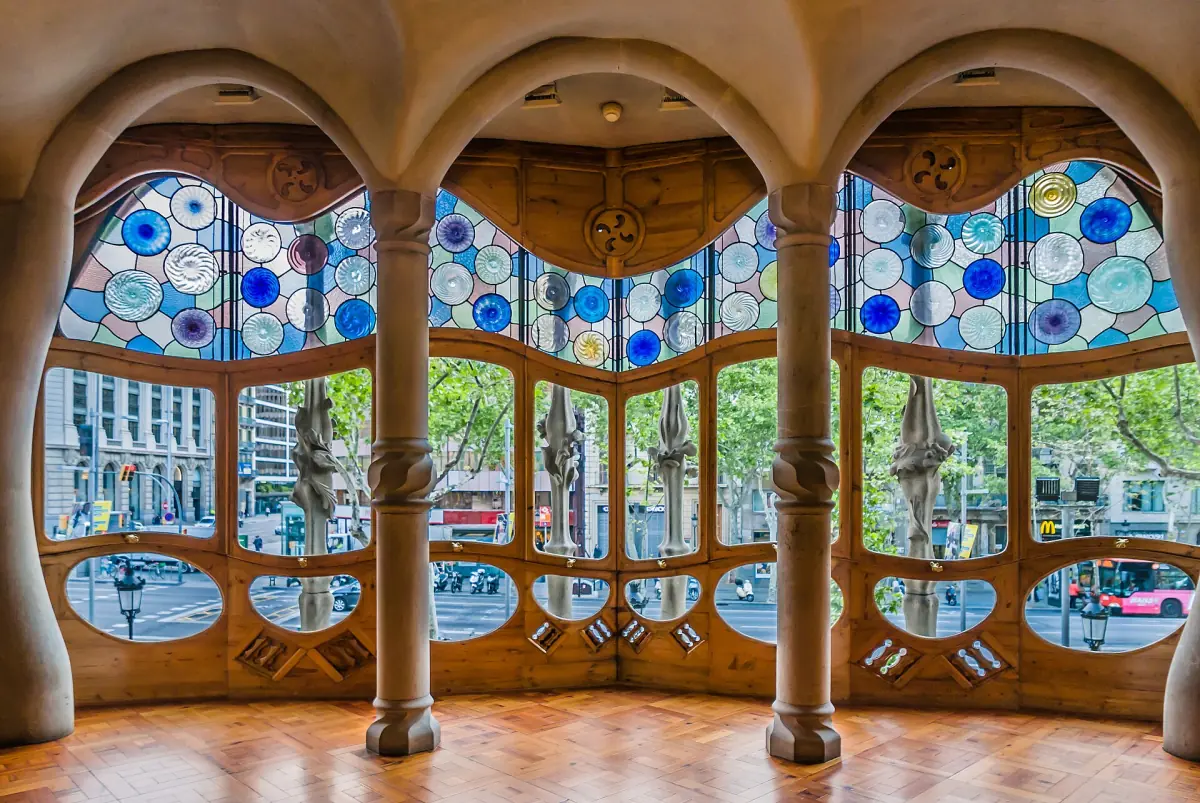
Inside, Gaudí enlarged the existing light well. The blue tiles are darker at the top and lighter at the bottom so that daylight is spread more evenly, and the windows get bigger towards the bottom. On the noble floor he gave the salon a bay window towards the street, oak doors with organic shapes, coloured glass and a wavy ceiling. See the rooms in detail on the page about the interior of Casa Batlló.
The roof ends in large coloured scales and a tower with a four-armed cross. Dragon, Saint George and sea readings of this roof are popular interpretations, not explanations that Gaudí gave. More on this in the facade and roof guide.
Restoration and new rooms
The house is still being looked after and extended.
Facade and rear facade
Work on the facade is dated 2024. The recovery of the rear facade and the back patio is placed in 2025. Both dates are given for the same long programme, so do not read either as the end of all works.
Digital rooms
The Gaudí Dôme, designed by Miguel Alonso, and the Gaudí Cube, with a work by Refik Anadol, were presented in April 2021. They are digital installations and not rooms from Gaudí's time. Which ticket gives access depends on the variant.
Gaudí Year 2026
10 June 2026 was the 100th anniversary of Gaudí's death. A new exhibition on the second floor has run since 8 July 2026 until 10 January 2027. The exhibition ticket alone is not a house visit.
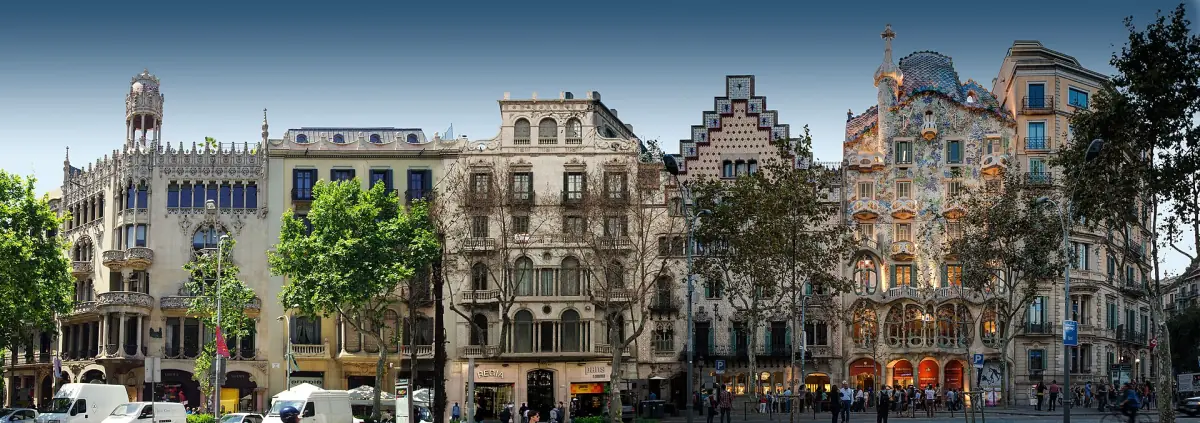
The house sits in a row of other Modernisme buildings. Read about the neighbours on the page about the Passeig de Gràcia and the Block of Discord. For the other works in the same UNESCO group, see Gaudí in Barcelona.
Casa Batlló history: frequently asked questions
Who built Casa Batlló?
The original apartment house was built in 1875 or 1877 to a design by Emili Sala Cortés. Antoni Gaudí remodelled it from 1904 to 1906 for the textile entrepreneur Josep Batlló i Casanovas, who had bought it in 1903.
Did Gaudí build the house from scratch?
No. He renovated an existing building. A planned demolition was dropped, and he redesigned the facade, the room layout and the light well.
Who owns Casa Batlló today?
The Bernat family has managed and restored the house since the 1990s, with 1993 given as the start. The house is privately run.
When did Casa Batlló open to visitors?
It opened for public presentations and events in 1995, and cultural visits began in 2002, the International Gaudí Year.
Is Casa Batlló a UNESCO World Heritage site?
It belongs to the serial site Works of Antoni Gaudí, which has 7 components. The house joined it in the 2005 extension.
Is this the official Casa Batlló website?
No. This is an independent guide with no connection to Casa Batlló, its owners or any ticket seller.